


Introduction
Marco polo bridge is a stone bridge located 15 km southwest of Beijing city center in the Fengtai District. It bridges the Yongding River, a major tributary of Hai River. According to historical records, the "Lugou River is also called the Heishui (Black Water) River." In the local dialect in ancient times, lu (reed) meant black; Thus the Heishui River became known as the Lugou River, and the bridge was accordingly given the same name.
History & Background
Over this river there is a very fine stone bridge, so fine indeed, that it has very few equals in the world.
—?The Travels of Marco Polo
Construction of the original bridge on this site commenced in 1189, the final year of Emperor Shizong of Jin's reign and was completed under his successor in 1192. Following damage from the flooding Yongding, the bridge was reconstructed under the Kangxi Emperor of the Qing dynasty in 1698. The Marco Polo Bridge is well-known because it was highly praised by the Venetian traveler Marco Polo during his visit to China in the 13th century (leading the bridge to become known in Europe simply as the Marco Polo Bridge), and for the 20th century Marco Polo Bridge Incident, which marked the beginning of the Second Sino-Japanese War (1937–1945).
Following the Communist takeover of China in 1949, the bridge was decked in asphalt and carried motor vehicular traffic.
Structure & Architecture
The Marco Polo Bridge is 266.5 meters (874 ft) in length and 9.3 m (30.5 ft) in width, supported on 10 piers and 11 segmental arches. Hundreds of artistically unique stone lions from different eras line both sides of the bridge. The most intriguing feature of these beasts is the fact that there are more lions hiding on the head, back or under the belly or on paws of each of the big lions.

The people of Beijing have a saying to the effect that "the lions of the Lugou Bridge are too numerous to count," which is explained by the fact that the lions are carved in a great variety of aspects and distributed unequally among the 280 white marble posts. A pair of vividly carved reclining stone elephants and a number of other animal figures guards each end of the bridge.

However, record has it that there were originally a total of 627 lions. The posture of each lion varies, as do their ages. Most date from the Ming (1368–1644) and Qing (1644–1911) dynasties, some are from the earlier Yuan dynasty (1271–1368); while the few lions dating from as long ago as the Jin dynasty (1115-1234) are now quite rare, for the 800 years since its completion, the bridge has been a well known scenic spot in Beijing.
As well as being famed for its aesthetic features, Marco Polo Bridge is also considered to be an architectural masterpiece. It is built of granite, with a large central arch flanked by ten smaller ones. Each of the ten piers is protected by triangular iron pillars that have been installed to prevent damage by flood and ice.

Marco Polo Bridge Incident
On July 7, 1937, the Japanese army launched a military exercise near Lugouqiao (Marco Polo Bridge) in southwestern Beijing (Beiping). They later claimed one of their soldiers was missing and asked to enter the Wanping County to look for him. Knowing the Chinese army would reject the request, they used this as an excuse to launch a full scale attack.
The intruding Japanese forces assaulted Lugou Bridge or Lugouqiao(known as the Marco Polo Bridge), and Chinese defending soldiers responded by gun fire. This has been known as the world-famous Lugou Bridge Incident, which marked the beginning of Japan's all-out aggression against China as well as of China's War of Resistance to Japan.
Thereafter July 7 became the very day for marking the incident.
Fighting courageously and uninterruptedly against Japanese aggressor troops for eight straight years, Chinese people the final victory on August 15, 1945 when Japan surrendered unconditionally.
Information
How to get to Marco Polo Bridge
1. Take bus 309, 329, 339, 458, 459, 624, 661, 662 or 952 and get off at Lugou Xinqiao Station.
2. Take bus 77, 96, 97, 133, 310, 313, 452, 843, 896, 983, or Fast Transit Line 45, 97, 145, or Special Line 17 and get off at Kangzhan Diaosuyuan (Sculpture Garden) Station.
3.Take Subway Line 14 and get off at Dawayao Station. Get out from Exit D.
Then take bus 339 at Xidaokou Bei Station and get off at Lugou Xinqiao Station.
Openning Hours
April - October: 07:00 to 20:00
November - March: 07:00 to 18:00
Tikcet Price: CNY 20
Prev: Cuandixia Village
Next: Peking Man Site
Duration:7-8 Hours
Attractions(Cities):Tiananmen Square, Forbidden City, Temple of Heaven, Summer Palace
Tour Style:One day, four Beijing essentials — Tiananmen Square, the Forbidden City, the Temple of Heaven and the Summer Palace — with a private English-speaking guide and your own air-conditioned car and driver. Itineraries run daily, take 7–8 hours door to door, and can start from your Beijing hotel, a train station or the airport arrivals gate. Your guide walks you through Ming (1368–1644) and Qing (1644–1911) palace courts with real dates instead of legend, then takes you to a genuine local kitchen for Peking Duck — you order, you pay for what you eat, and vegetarian, halal or lighter meals are easy to arrange. Want to fold in Tai Chi at the Temple of Heaven, a hutong morning market, Peking Opera or Hanfu photos? Just tell us; the car and the day are yours.
Duration:2 Days, 1 Night
Attractions(Cities):Temple of Heaven, Tiananmen Square, Forbidden City, Nanluoguxiang, Mutianyu Great Wall, Summer Palace
Tour Style:Two days, one night, six Beijing essentials — with a private English-speaking guide, your own car and driver, and one overnight in a city-centre four-star. Day one: Tiananmen Square, the Forbidden City (3,400-metre red wall, 980 buildings), a hutong lunch stop, the Temple of Heaven, then evening on Nanluoguxiang. Day two: an early start to the Mutianyu Great Wall — cable car up, optional toboggan down — then the Summer Palace and its 728-metre Long Corridor before drop-off at your hotel, station or airport. Tell us if you want to fold in Peking Duck, 798 Art District, flag-raising at dawn, Chinese acrobatics, a street-snack crawl or Hanfu photos.
Duration:3 Days, 2 Nights
Attractions(Cities):Tiananmen Square, Forbidden City, Temple of Heaven, Jingshan Park, Summer Palace, Kunming Lake Boat Riding, Nanluoguxiang, Panjiayuan Antique Market, Mutianyu Great Wall, Bird's Nest, Water Cube
Tour Style:Three days, two nights in a city-centre four-star, eleven Beijing essentials and a private English-speaking guide, your own air-conditioned car and a professional driver for the whole trip. Day 1: Tiananmen Square, the Forbidden City (3,400-metre red wall, 980 buildings), Jingshan Park for the north panorama over golden roofs, evening on Nanluoguxiang. Day 2: the Mutianyu Great Wall — cable car up, optional toboggan down — back through the city for a walk around the Bird’s Nest and Water Cube lit up. Day 3: the Temple of Heaven, the Summer Palace with a boat on Kunming Lake, and a slow hour at the Panjiayuan antique market before drop-off at your hotel, station or airport. Lunch isn’t included — your guide takes you to genuine local kitchens and you pay for what you eat.
Duration:5 Days, 4 Nights
Attractions(Cities):Mutianyu Great Wall, Bird's Nest, Water Cube, Qianmen Street, Morning Market, Forbidden City, Tiananmen Square, Jingshan Park, Temple of Heaven, Nanluoguxiang, Facial Makeup Painting, 798 Art Zone
Tour Style:Five days, four nights in a city-centre Beijing hotel with a private English-speaking guide, your own car and a professional driver. This is the ‘beyond the surface’ version of Beijing — yes, Tiananmen Square, the Forbidden City (3,400-metre red wall, 980 buildings), Jingshan Park for the golden-roof panorama, the Temple of Heaven and the Mutianyu Great Wall are all in, but the tour also threads in a dawn hutong morning market, a face-painting workshop with a working Peking Opera artist, the 798 Art District’s galleries and cafés, an evening at Qianmen pedestrian street, and a slow look at the Bird’s Nest and Water Cube at the old Olympic Park. Lunch isn’t included on purpose — your guide takes you to genuine local kitchens each day and you pay for what you eat. Drop-off on Day 5 at your Beijing hotel, station or airport.
Duration:10+ Hours
Attractions(Cities):Terracotta Warriors and Horses Museum
Tour Style:A long but focused day trip to the Terracotta Warriors and Horses Museum. Your private English-speaking guide and car meet you at your Xi’an hotel, train station or airport (arrive from Beijing by G-series high-speed rail — 4.5–6 hours, or an early flight if you prefer). Lintong, 35 km east of Xi’an, holds roughly 8,000 life-size clay soldiers, horses and chariots buried with the first emperor Qin Shi Huang around 210 BC and rediscovered by farmers digging a well in 1974 (UNESCO-listed). You’ll cover Pit 1, Pit 2, Pit 3 and the bronze-chariot museum at a proper pace, break for lunch at a local noodle kitchen on your own bill, and finish back at your Xi’an pickup point or the station for the evening train. Total door to door: 10+ hours.
Wechat: YourWayHolidayAsia
24 Hours Hotline:
+86 137-3541-1378
Certificate of Excellence
2012~2026

Your Way Holiday
(Your Privacy is Protected)
 Forbidden City Beijing: Ultimate Tour Guide to China’s Imperial Palace
 Temple of Heaven
 Ming Tombs
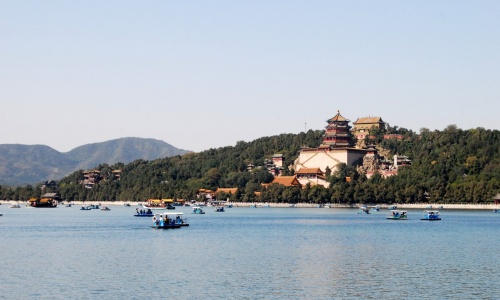 Exploring the Summer Palace Beijing: A Complete Guide to China’s Most Iconic Royal Garden
 Tiananmen square
 Beijing Hutongs: A Living Tapestry of Time
 Water Cube
 Beijing Bird's Nest – Explore the Iconic National Stadium Beijing
1 to 1 tailor-made service from our professional travel advisors for the most sophisticated
Constantly excellent reviews for attraction, hotel and service Competitive price
Local experts provide quality tours Best selected knowledgeable local guides Authentic local restaurants
7*24 hours available to create you a worry-free tour. No Hidden Fees and absolutely no pressure to buy. Secured







Copyright © 2017 Chinabeijingprivatetour.com All rights reserved. 浙ICP备18056007号-2


